Where to See Wildlife in Charleston's Parks
The Charleston Lowcountry is one of the richest wildlife habitats on the East Coast. Tidal marshes, maritime forests, barrier islands, and coastal waterways create overlapping ecosystems where birds, dolphins, alligators, sea turtles, and hundreds of other species thrive. You don't need a boat or a guide — just the right park at the right time.
Palmetto Islands County Park — The Birdwatcher's Paradise
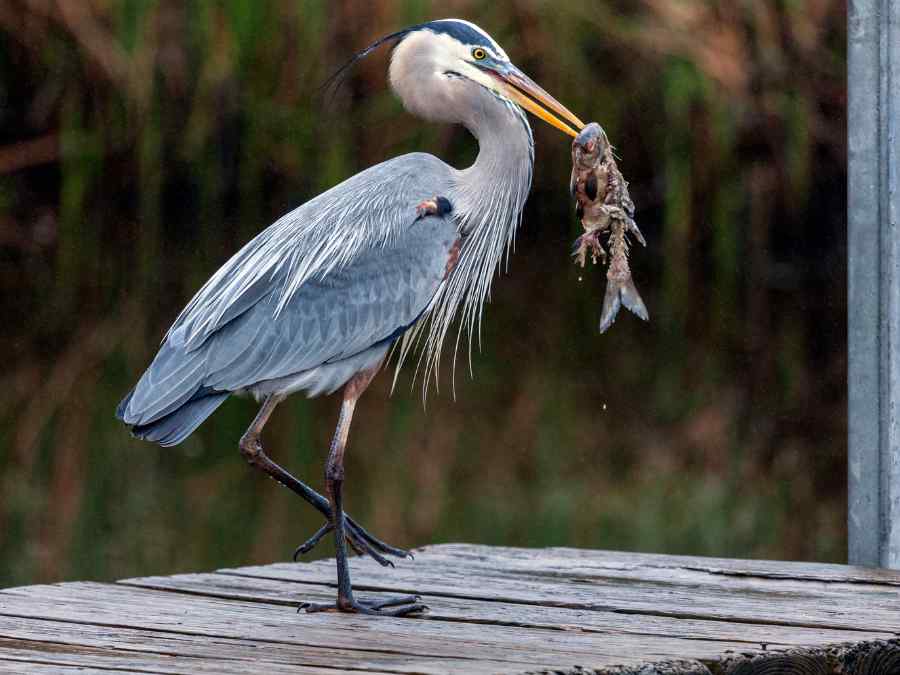
Palmetto Islands County Park in Mount Pleasant is the single best spot for birdwatching in the Charleston area. The park's 943 acres of tidal creeks, marsh, and maritime forest host great blue herons, snowy egrets, wood storks, and osprey year-round. In spring and fall, migrating songbirds pass through in large numbers. The boardwalk through the marsh is the prime viewing area — bring binoculars and arrive early in the morning when birds are most active.
Best time: Sunrise to 9 a.m., year-round. Spring migration (March–May) is peak season.
Caw Caw Interpretive Center — Alligators and Wading Birds
Caw Caw is a former rice plantation turned nature preserve on Highway 17 South, about 20 minutes from downtown. The six miles of trails wind through old rice fields, swamp, and bottomland forest. This is the most reliable place near Charleston to see alligators basking in the sun along the dike trails. Wading birds — herons, ibis, and egrets — hunt in the shallow impoundments. The swamp trail also attracts painted buntings in summer.
Best time: Morning, spring through fall. Alligators are most visible on warm sunny days from April to October.
Shem Creek — Dolphins at Dusk
The Shem Creek boardwalk in Mount Pleasant is one of the easiest places to spot bottlenose dolphins in the wild. The dolphins follow schools of fish into the tidal creek, often surfacing just feet from the boardwalk. The best viewing is during incoming tides in the late afternoon. You'll also see pelicans diving, herons stalking the shallows, and the occasional stingray gliding past.
Best time: Late afternoon on an incoming tide, year-round. Summer evenings are especially active.
Folly Beach County Park — Sea Turtles and Shorebirds
Folly Beach County Park is a nesting site for loggerhead sea turtles from May through August. The park marks and protects nests, and volunteers lead nighttime turtle walks during peak season — check with the park office for schedules. Even outside turtle season, the beach hosts sanderlings, plovers, royal terns, and laughing gulls. The calmer western end of the beach is best for shorebirds.
Best time: Early morning for shorebirds. May–August for sea turtle nesting. Late July–September for hatchling emergence.
James Island County Park — Marsh Edges
The trails and fishing docks at James Island County Park border tidal marsh and creeks where herons, egrets, and fiddler crabs are easy to spot. The park's ponds also attract seasonal ducks and coots in winter. Walk the perimeter trails early in the morning for the best sightings. Occasionally, river otters are seen along the creek banks.
Best time: Early morning. Winter for waterfowl, spring/summer for wading birds.
Mount Pleasant Waterfront Park — Easy Access Harbor Wildlife
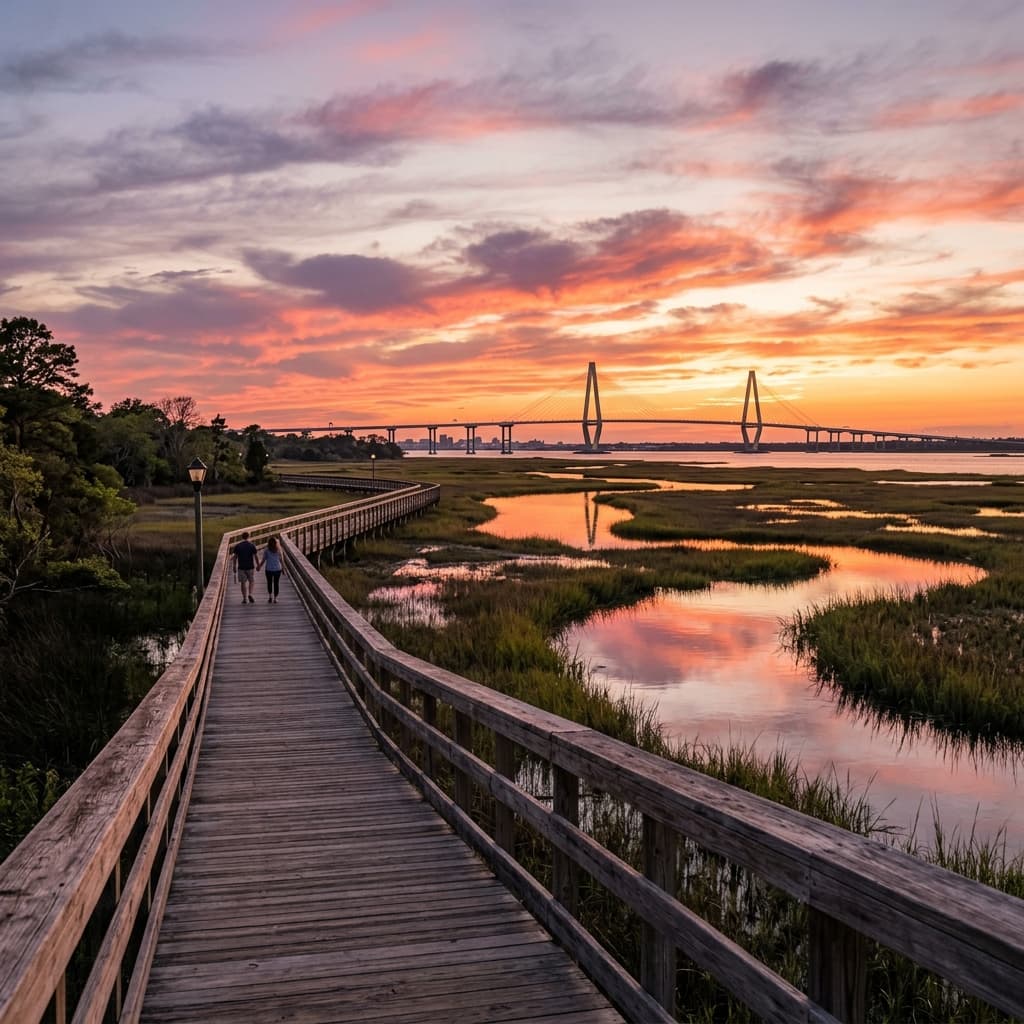
Mount Pleasant Waterfront Park offers the most convenient wildlife viewing in the area. Walk the marsh boardwalk at low tide to see fiddler crabs by the thousands, and watch the pier for brown pelicans, cormorants, and the occasional dolphin pod cruising past. The park's location under the Ravenel Bridge also makes it a perching spot for peregrine falcons.
Best time: Low tide for marsh life. Any time for birds and dolphins.
Wildlife Viewing Tips
- Binoculars: Essential for birdwatching. Even a basic pair makes a huge difference.
- Stay quiet: Wildlife is most active when the area is calm. Early mornings on weekdays are ideal.
- Keep distance: Never approach alligators, nesting birds, or sea turtle nests. Use a zoom lens instead.
- Use the interactive park map to locate parks with marsh and waterfront access.